
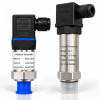
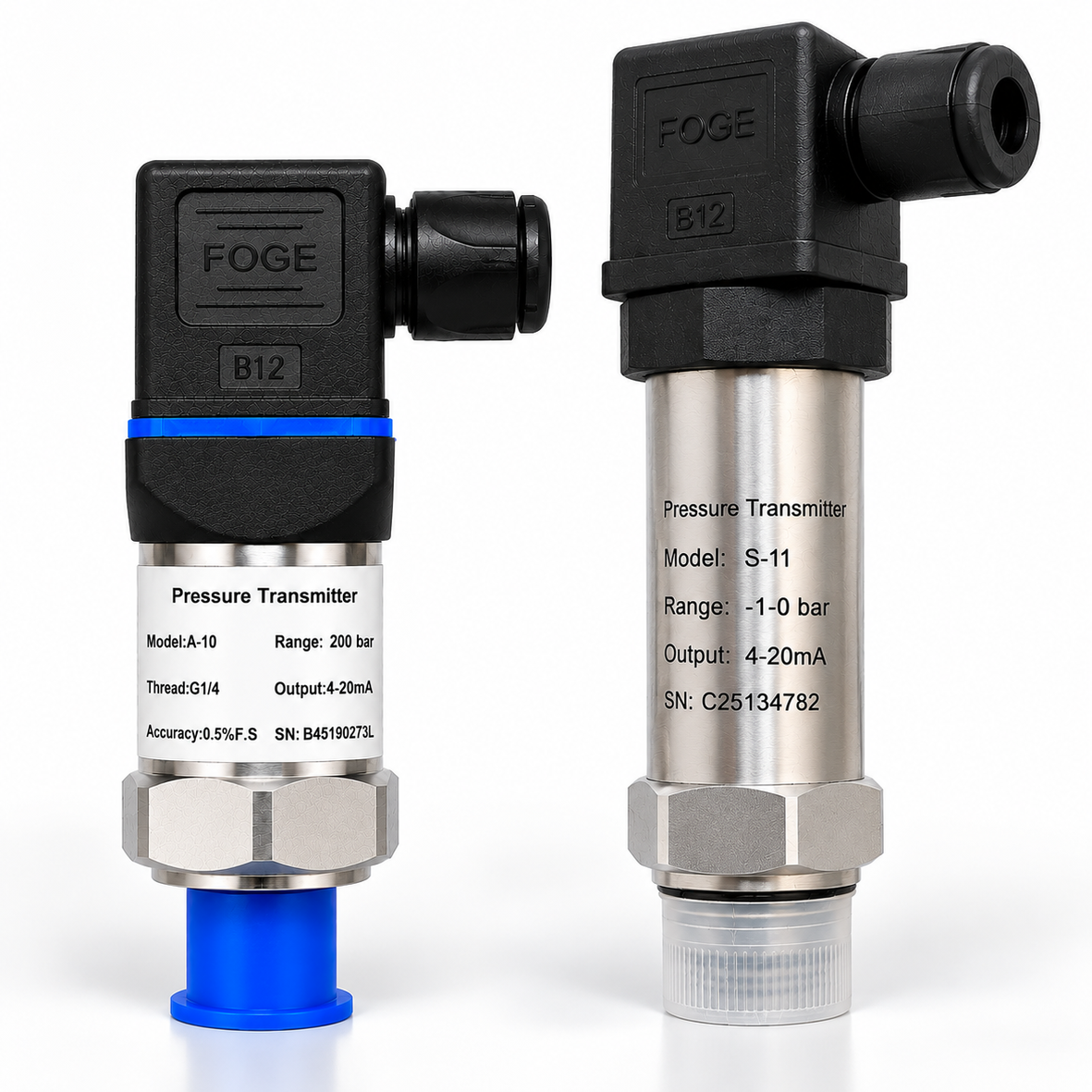
Product Description
NST Pressure Transmitters
Nik Senso Tech (NST) pressure transmitters are designed for accurate pressure measurement in harsh industrial conditions. They use Piezoresistive sensor technology and feature a steel housing. Standard 4-20mA output, 8-30V DC power supply, and a process connection matched to the model are key characteristics of these transmitters.
NST pressure transmitters are produced according to the brand’s standard pressure ranges. The required range is determined by operating pressure, maximum pressure, pressure type (Gauge, Absolute, or Compound), and process conditions. This makes them suitable for a wide range of industrial, hydraulic, pneumatic, and process applications.
NST A10 Series
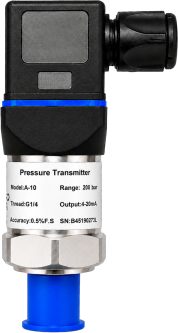
The A10 series is used for pressure measurement in general industrial systems, hydraulics, pneumatics, pumps, compressors, and fluid transfer lines. The process connection for this series is G1/4″, and it is available in Gauge, Absolute, and Compound pressure types.
A10 Series Specifications
| Parameter | Value |
|---|---|
| Brand | Nik Senso Tech (NST) |
| Series | A10 |
| Pressure Range | Brand standard ranges |
| Pressure Type | Gauge / Absolute / Compound |
| Sensor Technology | Piezoresistive |
| Process Connection | G1/4″ |
| Output | 4-20mA |
| Power Supply | 8-30V DC |
| Housing Material | Steel |
| Country of Origin | Finland |
A10 Series Applications
-
Industrial machinery and equipment
-
Hydraulic and pneumatic systems
-
Pumps and compressors
-
Pipelines and process equipment
-
Fluid transfer
-
Instrumentation and industrial automation
-
Oil, gas, and petrochemical industries
-
Negative and positive pressure measurement in Compound models
NST S11 Series
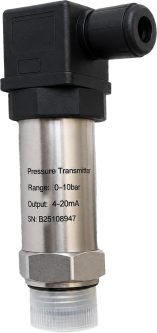
The S11 series is built for applications requiring higher accuracy, long-term stability, and more customized configuration. The process connection for this series is G1/2″. Its output is 4-20mA.
S11 Series Specifications
| Parameter | Value |
|---|---|
| Brand | Nik Senso Tech (NST) |
| Series | S11 |
| Pressure Range | Brand standard ranges |
| Pressure Type | Gauge / Absolute / Compound |
| Sensor Technology | Piezoresistive |
| Process Connection | G1/2″ |
| Output | 4-20mA |
| Power Supply | 8-30V DC |
| Housing Material | Steel |
| Country of Origin | Finland |
S11 Series Applications
-
Sensitive industrial processes
-
Advanced control and monitoring systems
-
Laboratory and calibration equipment
-
Pharmaceutical, food, and hygiene industries
-
Precision hydraulics and pneumatics
-
Automation projects with specific requirements
-
Applications requiring customized configuration
A10 vs. S11 Comparison
| Feature | A10 Series | S11 Series |
|---|---|---|
| Sensor Technology | Piezoresistive | Piezoresistive |
| Pressure Range | Brand standard ranges | Brand standard ranges |
| Pressure Type | Gauge / Absolute / Compound | Gauge / Absolute / Compound |
| Process Connection | G1/4″ | G1/2″ |
| Output | 4-20mA | 4-20mA |
| Power Supply | 8-30V DC | 8-30V DC |
| Housing Material | Steel | Steel |
| Country of Origin | Finland | Finland |
Selection and Installation Notes
Before selecting an NST pressure transmitter, determine the following:
-
Normal operating pressure of the system
-
Maximum expected pressure
-
Required pressure type: Gauge, Absolute, or Compound
-
Fluid temperature and ambient conditions
-
Fluid type and compatibility with the steel housing
-
Required process connection: G1/4″, G1/2″, or other
-
Required output: 4-20mA
-
Power supply of the receiving device
Range selection should be based on the actual process pressure, not simply the largest available range. If system pressure is low, a larger range means only a small portion of the measurement span is used. If process pressure exceeds the selected range, a higher range must be considered.
Summary
NST pressure transmitters are produced in the A10 and S11 series according to the brand’s standard ranges. The A10 series with G1/4″ connection is suited for general industrial applications, while the S11 series with G1/2″ connection is designed for more precise and sensitive applications. Both series use Piezoresistive sensors, a steel housing, and 4-20mA output. Final model selection should be based on operating pressure, maximum pressure, pressure type, and actual process conditions.